What Makes the Irish Pub NYC Experience Feel So Authentic
Walk into a truly good Irish pub in New York and the first thing you notice is not the Guinness tap, the dark wood, or the football on screen. It is the feeling that the place has its own internal weather. The room hums at a different speed than the street outside. People settle in. Strangers speak to one another without ceremony. The bartender seems to know when to leave you alone and when to lean in with a story. That quality is hard to fake, and it is the reason the best Irish Pub NYC spots stand apart from ordinary themed bars.
Authenticity, in this context, is often misunderstood. It is not about importing every chair from County Cork or covering the walls with road signs from Galway. Real Irish pub culture has never been just décor. It is social architecture. It is about the relationship between the room, the staff, the regulars, the drinks, the music, and the pace of the evening. New York, for all its speed and invention, happens to be one of the few cities outside Ireland where that formula can still thrive.
The result is an experience that feels familiar even to people who have never set foot in Dublin, Belfast, or Dingle. The best pubs do not perform Irishness. They live it.
The room matters, but not in the way people think
Many people assume authenticity starts with interior design, and to a point, they are right. A convincing Irish pub rarely feels overlit or overplanned. There is usually timber, brass, framed mirrors, sturdy stools, and a bar built for conversation rather than bottle service. But there is a difference between design that supports pub life and design that tries too hard to announce itself.
The most authentic places tend to look as if they evolved over time. The wood shows wear in the right places. The bar top carries years of elbows and pints. The mirrors are practical, not ornamental. Seating is arranged so that solo drinkers, couples, and larger groups can all fit without competing for space. In many of New York’s better Irish pubs, this sense of accumulated life is what lands first. The room feels used, not staged.
Some owners in the city have gone as far as importing old millwork or custom building interiors based on traditional pub plans from Ireland. That can help, especially when it is done with restraint. Yet even a beautifully built room can feel hollow if everything else is off. Authenticity is not a museum finish. It is whether the room encourages the right kind of human behavior. Can someone stop in for one pint and feel welcome? Can a group celebrate without swallowing the whole bar? Can a regular read the paper at 4 p.m. Without feeling out of place?
If the answer is yes, the room is doing its job.
The bartender is the real center of gravity
A great Irish pub, whether in Manhattan, Queens, or the Bronx, stands or falls on the people behind the bar. Not their flair, not their personal brand, not their ability to shout over the music. Their judgment.
In a proper pub, bartending is a form of social management. The staff knows how to hold the room together. They pace service. They remember faces. They know who wants to talk and who wants a quiet corner. They can switch, in the span of five minutes, from pouring six pints for a loud post-work crowd to serving tea to an older regular who has been coming in on Wednesdays for fifteen years.
That subtlety is one of the strongest markers of an authentic Irish Pub NYC experience. Irish hospitality, at its best, is warm without being intrusive. You are not pressured into a performance of fun. You are not hustled out the door because your second drink took too long. At the same time, the service is rarely passive. The bartender keeps the rhythm of the place moving.
I have seen this difference play out in bars all over the city. In a generic pub, a customer asks what whiskey is good and gets a menu pointed at them. In a proper Irish pub, the bartender asks one or two questions, steers them toward a pour that suits their taste and budget, and maybe adds a quick bit of context. Not a lecture, just enough to show care. That is the sort of professional ease patrons remember.
It also helps when the staff has some genuine connection to the culture, though it is not mandatory in a simplistic sense. An Irish accent behind the bar does not automatically create authenticity, and a New Yorker without Irish roots can absolutely understand the craft. What matters more is whether the staff respects the traditions of the pub and knows how to carry them forward.
Guinness is part of the story, but only part
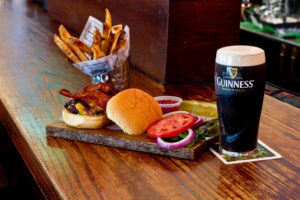
No discussion of Irish pub authenticity gets far without Guinness, and for good reason. In many places, the pint acts as a test. If the Guinness is handled badly, people start to question everything else.
This does not mean every pub must worship at the altar of stout, or that a good Irish pub needs to sell only Irish beer. New York drinkers are knowledgeable https://edwinaurb141.brightsora.com/posts/why-friends-choose-an-irish-pub-nyc-spot-for-reunions and varied. Many want local lager, craft IPA, cider, or a good whiskey highball. But in an authentic setting, Guinness is not an afterthought. The lines are clean. The glassware is right. The pour is taken seriously. Staff know that stout needs proper temperature and proper turnover. A beautiful pint in a dead room means less than people think, but a bad pint in a room claiming authenticity is hard to excuse.
The same principle applies across the drinks program. A strong Irish whiskey selection helps, especially if it is broad enough to include approachable blends alongside pot still expressions and a few harder-to-find bottles. You do not need a back bar with 300 labels to feel legitimate. In fact, giant whiskey walls can veer into spectacle. What works better is a curated range and bartenders who know it.
A pub food menu matters too, though here the standard should be honesty rather than nostalgia. Some Irish pubs in New York serve excellent shepherd’s pie, fish and chips, bangers and mash, brown bread, seafood chowder, or a full breakfast on weekends. Others do a simpler menu and do it well. The key is that the food suits the room. It should feel comforting, generous, and built for actual pub life, not designed only for Instagram.
Conversation is the entertainment
One of the most overlooked reasons an Irish pub feels authentic is that the evening is not overprogrammed. A lot of bars in New York are built around distraction. Giant screens everywhere, branding activations, volume turned so high that people surrender conversation and default to staring. That approach clashes with the soul of the pub.
Traditionally, the pub is a place where talk itself is the event. News gets exchanged. Arguments begin, soften, and begin again. Someone tells a story that grows better with each retelling. A newcomer gets folded into the edge of the conversation. That social permeability is central to the feeling people describe as authentic.
It is also surprisingly rare in a city where so many venues sort customers into isolated groups. The best Irish pubs keep a porous border between private and public life. You can come in alone and not stay socially invisible for long unless you want to. The room gives you options.
This is why layout, sound, and pacing matter so much. Music should support the room, not dominate it. Televisions, if present, should serve specific purposes, rugby on a Saturday, hurling, football, an important match, rather than becoming the permanent center of attention. There is a reason some of the most memorable nights in Irish pubs begin without any promise of excitement at all. A pub can turn a routine Tuesday into a good night simply because the atmosphere is alive.
Music helps, but forced performance hurts
Live traditional music can elevate an Irish pub dramatically. A good session changes the air in the room. The instruments pull people closer, but they do not usually crush conversation. In the best cases, the musicians are part of the pub, not a separate attraction imported to manufacture vibe.
That distinction matters. There is a large gap between a natural session in the corner and an aggressively marketed “Irish night” designed for tourists. Authenticity does not require live music every night, and it certainly does not require every song associated with Ireland. A pub can feel deeply Irish with no music at all if the room is right. Still, when music appears organically, it strengthens the sense that the pub is a lived-in cultural space.
The same goes for sport. Watching a big match in an Irish pub in New York can be one of the city’s great communal pleasures, especially during Six Nations rugby, major football tournaments, or GAA events with a committed local following. Yet the pub cannot rely solely on event traffic. If it only feels alive during scheduled programming, it has not built a real culture. The test is whether the place feels worth visiting on an ordinary afternoon.
The crowd carries the truth
A pub can have the right woodwork, the right taps, and the right playlist, yet still miss the mark if the crowd is too one-dimensional. What makes many of the best Irish pubs in New York feel authentic is that they attract overlapping communities. Irish immigrants, Irish Americans, neighborhood regulars, office workers, musicians, construction crews, tourists who got lucky, couples on dates, people grabbing a solo lunch, older men watching racing, younger groups meeting before a concert. When these streams coexist, the room develops texture.
That mix reflects the actual social role of the pub in Irish life. A pub is not one thing all night and every night. It shifts by hour, by season, and by who walks in. Noon is different from 6 p.m. A rainy Sunday has its own mood. Christmas week feels different from late August. The more flexible the room, the more real it feels.
There is also a democratic quality to the authentic pub that New York responds to very well. It does not matter much what you do for a living once you are on your stool. Status softens at the bar. Not completely, this is still New York, but enough that the place can feel unusually open. That openness is one reason people remain loyal to these establishments for years, even as restaurants and nightlife trends rotate around them.
History counts, even when it is still being written
Some of the most respected Irish pubs in New York have decades behind them. Their stories are tied to waves of immigration, labor history, local politics, music scenes, and neighborhood change. That history matters because authenticity grows through repetition. A pub becomes itself by surviving enough ordinary days, enough funerals and birthday toasts and first dates and hard winters and easy summers.
Yet age alone does not guarantee anything. Old pubs can become stale, complacent, or too dependent on memory. At the same time, a newer pub can feel remarkably authentic if it understands what it is trying to preserve. What counts is continuity of spirit. Does the place serve a neighborhood? Does it attract regulars naturally? Does it earn trust over time?
Many of New York’s Irish pubs are balancing exactly this challenge. Rents are high. Staffing is difficult. Younger customers drink differently from earlier generations. Some want lower alcohol options, better coffee, better food, and more flexible hours. A smart pub adapts without surrendering its center. That balancing act is part of authenticity too. Real traditions are not frozen. They absorb change while keeping their shape.
Small signals people notice immediately
Sometimes authenticity reveals itself through details so small that customers register them before they can explain them. The way the bartender handles change. The fact that the ketchup bottle is simply there, not delivered like a precious object. The way someone greets a regular by name but still makes room for a first-timer. The absence of pressure to “turn the table.” The quality of the tea. The brown bread that tastes like someone actually cared.
These details build trust because they show the place understands use, not just image. A well-run Irish pub knows that hospitality is cumulative. One thoughtful gesture does not create a feeling on its own, but a hundred small right decisions do.
A few of those signals tend to show up again and again:
- The lighting flatters the room rather than spotlighting it.
- Staff let conversations breathe.
- The drink menu makes sense for the clientele.
- Music and sport support the mood instead of smothering it.
- Regulars and first-timers can comfortably share the same space.
None of these qualities are expensive on paper. What is expensive is the discipline required to maintain them over years.
Why New York is uniquely suited to this tradition
New York has long been fertile ground for pub culture because it rewards places with identity. A city this intense creates demand for spaces where people can exhale without becoming anonymous. The Irish pub answers that need elegantly. It offers familiarity without stiffness, sociability without overengineering, and ritual without pretension.
The city’s Irish history also matters. Generations of immigrants built communities here, and pubs often served as informal employment centers, social clubs, cultural hubs, and second living rooms. That legacy still echoes, even in neighborhoods that have changed dramatically. You can feel it in places where old-world hospitality meets new-world pace.
At the same time, New York keeps these pubs honest. Customers here are quick to detect anything overly theatrical. A pub that leans too hard on shamrocks, slogans, and caricature usually gets sorted into the tourist category fast. The city prefers places with backbone. That is why so many enduring Irish pubs feel understated. They know what they are and do not need to shout.
For visitors, this can be a revelation. Someone may come looking for an “Irish Pub NYC” experience and expect novelty, only to find that the most memorable part is how unforced the whole thing feels. They stay longer than planned. They order another round. They begin talking to people at the next table. Somewhere along the line, they stop evaluating whether the place is authentic and simply start enjoying it. That shift is the point.
The edge cases that separate the good from the great
Not every Irish pub needs to be old, loud, crowded, or steeped in nostalgia. Some excellent ones are bright during lunch, quiet in the afternoon, and only lively after work. Others function almost like neighborhood dining rooms with a stronger whiskey shelf. The category is broader than many people assume.
There are also pubs that are authentic in one lane and weak in another. A place might have perfect Guinness but indifferent service. Another might have wonderful staff and a room full of character, but a menu that feels outsourced. One pub may excel as a sports bar for big match days, while another thrives because it is the sort of place where a person can read, write, and nurse a pint for an hour without feeling awkward. Authenticity is not a purity test. It is a pattern of strengths that, taken together, feels trustworthy.
That is why experienced pub-goers often judge on atmosphere first and features second. You can fix a menu faster than you can build a culture. You can retrain staff on a pour, but it takes years to develop a room where people instinctively return. The great pubs know that their true product is not alcohol. It is belonging.
What people are really looking for when they seek authenticity
When people talk about wanting an authentic Irish pub, they are often describing a hunger for something broader than national identity. They want steadiness. They want warmth without salesmanship. They want a public space that still feels personal. They want to be known a little, or at least treated as if they could be known if they kept coming back.
That is what the finest Irish pubs in New York provide. They give structure to the casual hour. They let celebration and routine share the same room. They preserve standards that many newer hospitality concepts have abandoned, consistency, memory, comfort, and restraint.
For all the mythology around pub culture, the truth is refreshingly practical. Authenticity comes from repeated acts of competence and welcome. It comes from rooms built for people rather than optics. It comes from bartenders with judgment, drinks served properly, food that makes sense, and a crowd varied enough to keep the place human.
A truly authentic Irish Pub NYC experience feels real because it is real. Not perfect, not frozen in time, not performed for outsiders, just alive in the old-fashioned sense. The door opens, the noise spills out, and for a few hours the city becomes smaller, friendlier, and easier to inhabit. That is the magic people recognize, even if they cannot name it right away.
Hibernia Bar
401 W 50th St
New York, NY 10019, United States
Phone: +1 212-969-9703
FAQ About Irish Pub NYC
What is the best Irish pub in NYC?
The best choice depends on your location and preferred atmosphere. Hibernia Bar is a neighborhood Irish pub in Hell's Kitchen offering Guinness, Irish whiskey, pub food, and sports viewing.
Where do Irish people go in NYC?
New York's Irish community gathers in many neighborhoods and venues. Hibernia Bar welcomes Irish expats, local residents, and visitors at 401 W 50th St, just off Ninth Avenue.
Where can I watch GAA games in New York?
Hibernia Bar lists GAA among the sports it shows. Call +1 212-969-9703 to confirm coverage and opening times for a particular match before visiting.
What is the difference between a bar and a sports bar?
A sports bar emphasizes televised games and a shared viewing atmosphere. Hibernia combines sports viewing with the food, drinks, and hospitality of a neighborhood Irish pub.